
Price Optimization: For an Improved Bottom Line, Use Price Optimization
Contents
- Why do most manufacturers have room for price optimization?
- List price optimization
- Discount optimization
- Price optimization and the role of cost-to-serve
- Price optimization through subscription and new payment models
- Operational enablers of pricing optimization
- Building a price optimization process
Price optimization remains the single most effective lever for improving the bottom line – yet many companies focus their efforts on cutting costs or driving volume growth. A 1% price increase has a greater impact on profitability than a 1% cost reduction or a 1% increase in revenue. The reality is that most companies have substantial untapped potential when it comes to improving their net prices.
In our two decades of consulting in price optimization, we’ve seen that 9 out of 10 companies are able to increase their net prices by 5–15%. This article explains why that is – and takes you deep into the most common and effective strategies for capturing better prices.
Why do most manufacturers have room for price optimization?
In the 200+ pricing research studies Contribution has conducted, we’ve found that 9 out of 10 companies underprice their products in at least one of their key markets. Typically, this translates to a 5–15% potential improvement in net prices. We emphasize “net price” because price optimization isn’t just about raising list prices – it also involves reducing discounts, managing rebates, and aligning pricing terms. We’ll explore these in more detail shortly.
So, why do companies so consistently leave money on the table?
First, internal “war stories” often circulate within an organization. These stories refer to the loss of important deals or accounts where it was said that “the price was too high.” These anecdotes can linger for years and erode pricing confidence, even though the market and competitive situation may have changed significantly since then. This creates a skewed internal narrative that overstates price sensitivity and discourages sales teams from pushing for value-based pricing.
Second, companies often underestimate how easy it is for buyers to object to pricing. “Your price is too high” is the most convenient and least confrontational excuse a buyer can make. It ends the discussion quickly. But it’s rarely the real issue. The true cause may involve product fit, brand trust, unmet expectations, or a preference for a competitor. Still, sales teams often accept this objection at face value, reinforcing a misleading signal.
Third, sales reps hear “you’re too expensive” multiple times a day. Repeated exposure leads them to internalize the message, which shapes their beliefs and behavior. But often, it’s simply a negotiation tactic. Most professional buyers are trained to push back on price, even if they are all satisfied with everything. If you ask your own procurement team, they’ll confirm that the same strategies are used internally.
Fourth, even when companies adopt value-based pricing in principle, the execution is often incomplete. Most focus on tangible economic benefits: faster installation, increased uptime, lower operating costs, or time savings. These are of course essential. But they don’t reflect the full value customers perceive.
Intangible value drivers, like brand reputation, service quality, post-sale support, innovation, or peace of mind, are frequently overlooked. They’re either underestimated or not well-researched. Yet these often account for a significant portion of perceived value.
Ultimately, most manufacturers aren’t underpricing because of inferior products or weak positioning. They’re underpricing because the internal narrative that “we’re too expensive” has become accepted as truth, despite limited evidence. This mindset spreads quietly across sales, marketing, and even product development. The good news? Once the narrative is exposed for what it is, it can be changed. With better insight into customer value, stronger internal alignment, and more deliberate pricing execution, companies can reverse this perception and start capturing the value they already deliver.
List price optimization
When we talk about list price optimization, we’re not referring to the standard 2–3% annual price adjustment that many companies apply. That kind of increase, usually based on inflation or wage growth, is rooted in cost-plus logic. It merely helps maintain profitability – not improve it.
Price optimization is different. It’s about finding the price point that maximizes profitability within your current target segments. This might mean:
- Selling the same volume at higher prices
- Selling less volume at significantly higher prices
- Or, in rare cases, selling more at lower prices
It is usually option one or two that turn out to be the best strategy. In fact, in all our 20 years of pricing research, very few cases have shown the “lower price = higher volume = higher profit” strategy to be effective.
There are several customer indicators that list price optimization may be possible:
- Low churn rates
- High customer satisfaction (e.g., NPS scores)
- Rare or no complaints about pricing – or even hearing that your prices are “fair” or “attractive”
Other indicators include:
- A high win/loss ratio in competitive bids
- High customer switching costs
And even without these indicators, you might still be in a position to raise prices – for instance, if there are significant market dynamics supporting it, or if you are adding significant new value to your products.
Don’t overlook intangible value
One of the most common reasons manufacturers underprice despite clear signals that higher prices could be accepted is the failure to recognize and account for intangible value.
Tangible value is easy to measure: reduced downtime, faster installation, lower energy use, longer product life. And these factors certainly justify price increases in many cases.
But perceived value – the customer’s subjective sense of what your offering is worth – often has just as much, if not more, influence on willingness to pay.
We see this clearly in Medtech, for example, where hospital procurement teams may place as much value on brand trust, regulatory credibility, and post-sale service as they do on technical specs. In building materials, the reliability of delivery, long-standing relationships, and a company’s reputation for standing behind its products can play a similar role.
The issue is that intangible value often goes unquantified and therefore unpriced. If you don’t recognize what makes your offer feel “safer,” “smarter,” or “easier” to your customer, it’s unlikely to be reflected in your list price.
Pricing optimization efforts that focus only on economic value miss this entirely. As a result, companies charge less than they could, simply because they haven’t taken stock of what customers actually value most – and what competitors might not be offering.
If you want to understand your price limit, there are two general approaches:
- Iterative price testing: raise prices by, say, 5–7% and monitor customer response. If there’s little pushback, repeat the process annually until negative signals appear.
- Structured pricing studies: for smaller customer bases (under 200), qualitative interviews using structured frameworks can work well. For larger segments, quantitative research methods are more suitable.
These studies typically pay for themselves within two months of implementation. For more on methodologies used to uncover price optimization opportunities, see our pricing research guide.
Discount optimization
If you can’t raise list prices, there is still a very good chance you can optimize your net prices by reducing discounts.
Discounts are one of the most frequently used tools in B2B pricing – yet also one of the least governed. While list prices may be centrally set, discounts often remain in the hands of individual sellers, with limited oversight and minimal alignment to commercial strategy. The result? Value leaks from the bottom line – quietly but consistently.
Across industries, we see the same signs: inconsistent discounting across similar clients, lack of transparency, outdated rebate schemes, and discount levels that bear little connection to the value delivered. For most companies, these issues represent a clear opportunity for discount optimization – with direct financial impact and as part of a broader price optimization strategy.
The hidden cost of unmanaged discounting
In many organisations, discount management is reactive rather than strategic. Several structural problems are especially common:
- Discounts are not closely monitored, partly due to lack of transparency. In many cases, they are applied to joint accounts and not allocated to individual clients who benefit from them.
- While formal discount policies may exist, sellers often have wide latitude – and exceptions are routinely made.
- Discounts are primarily volume-driven and do not reward other forms of valuable customer behaviour.
- Bonus and incentive systems rarely incentivise careful discount management.
The consequences are easy to spot:
- Discounts granted to similar clients vary wildly, undermining pricing integrity.
- Many clients continue receiving legacy discounts, despite reduced order volumes or strategic value.
- Some discounts are rooted in outdated agreements that neither the seller nor buyer fully remembers.
- The profitability of the client portfolio is disappointing – and it often comes as a surprise which accounts are actually loss-making.
- Discounting fails to support behavioural incentives or long-term strategic goals.
If any of this feels familiar, it is very likely that discount optimization is one of your best untapped levers for improving profitability – and an essential component of effective price optimization.
Making the invisible visible: analysis and price waterfalls
Before optimization begins, you need to understand what’s really happening. The best way to do this is through structured analysis that visualises discount behaviour and identifies patterns.
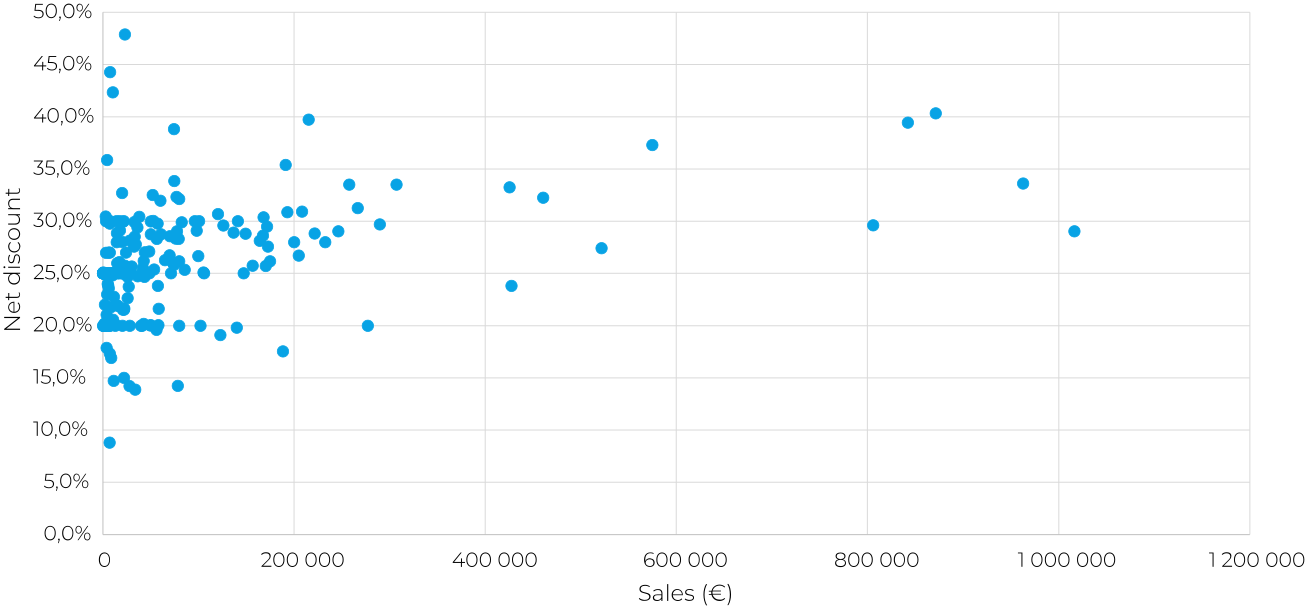
One effective tool is the discount scatter plot, which maps discount levels against variables like turnover, client type, or segment. It quickly reveals whether similar clients are treated consistently – and highlights outliers that may not be justifiable.
Another key tool is the price waterfall. This visual tracks how the list price erodes step by step through discounts, rebates, incentives, and terms – until it reaches the final net margin. A well-constructed waterfall gives you a clear picture of where margins are lost and which pricing levers are contributing most to leakage.
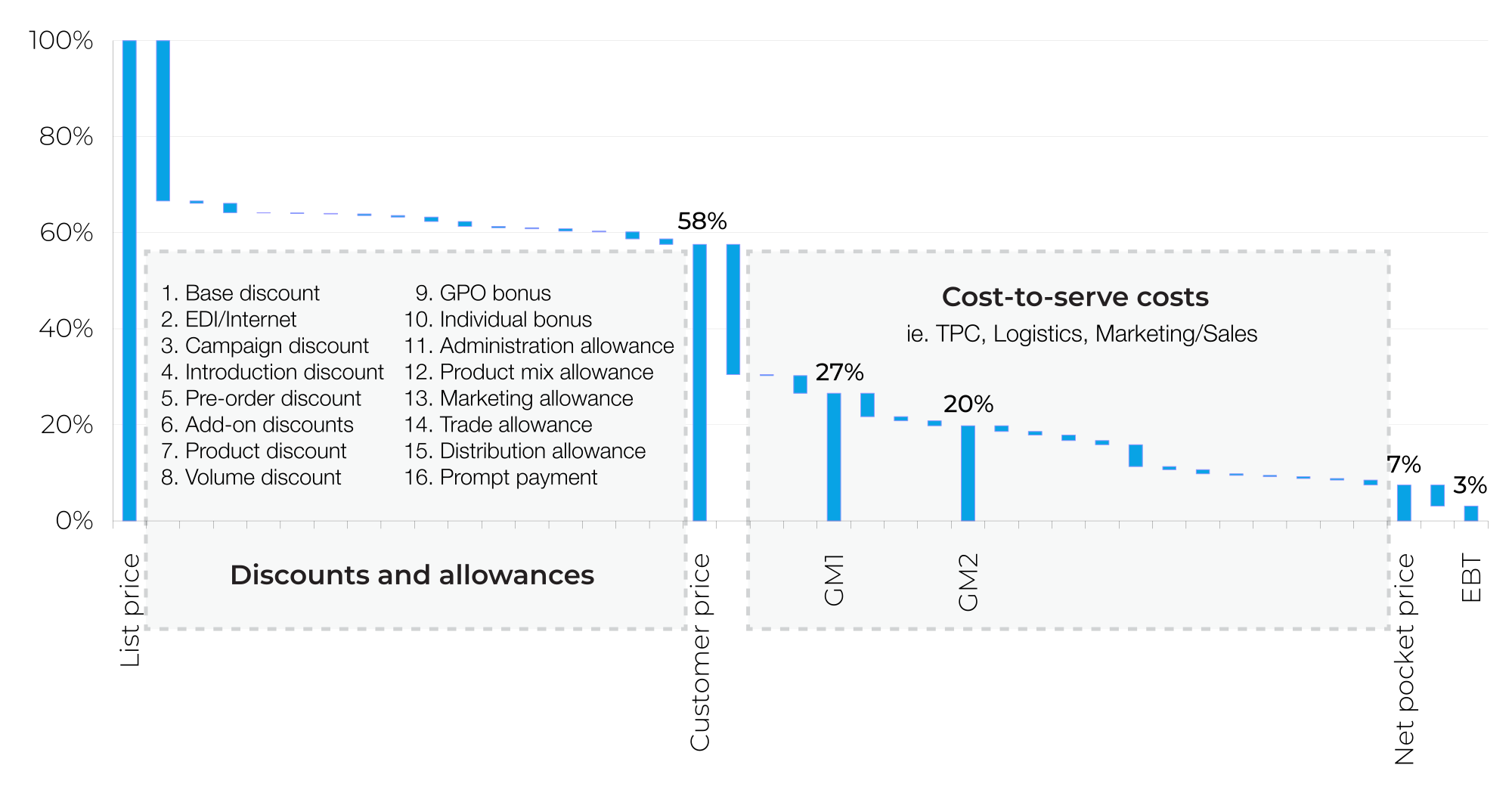
These tools not only surface hidden inconsistencies, they also help build internal alignment. They provide the facts needed to move away from anecdotal decision-making and toward a more evidence-based price optimization process.
From analysis to action: setting a smarter discount structure
Once the current situation is understood, the next step is to define what discounting should look like. This includes setting discount goals, refining structures, and enforcing better governance. A discount structure should:
- Tie discounts to desired behaviours, not just volume (e.g. early payments, long-term commitments, strategic cooperation)
- Ensure similar customers receive similar terms – unless there is a documented rationale
- Set transparent conditions for eligibility (e.g. bundling, exclusivity, reference agreements)
- Include a formal approval process for exceptions, ideally at a senior level
Discounting shouldn’t be reduced to offering less – it should be about offering with purpose. Strategic customers may still receive strong terms, but those terms must reflect the value they bring. Without structure, even the best discounts can become arbitrary over time.
In short, discount optimization is a key pillar in price optimization, ensuring that your strategic pricing intentions hold up in day-to-day sales execution.
The psychology of discounting: why 20% can feel like 30%
Beyond structure, there’s a behavioural dimension to discounting that’s often overlooked. In B2B negotiations, discounting isn’t just a financial exchange – it’s a psychological game.
Many buyers aren’t just seeking the lowest possible price. What they really want is confidence: that they’ve negotiated well, that they’re not overpaying compared to others, and that they’ve squeezed out the last bit of value.
Consider this scenario: a buyer asks for a 25% discount, and the seller immediately agrees. What does the buyer feel? Not satisfaction – but regret. They suspect they could have pushed harder and gotten more. The issue isn’t the number – it’s how the number is delivered.
Until a buyer feels they’ve reached the limit, they will continue negotiating. That’s why, in practice, a 20% discount presented with clarity and confidence often feels better to a buyer than a 30% discount that seems loosely given.
Understanding this psychology helps sales teams negotiate more effectively – without defaulting to higher concessions – and should be included in any well-rounded price optimization strategy.
Setting expectations early: taking control of the narrative
The most effective sellers don’t wait until the end of the negotiation to talk about discounting. They proactively shape expectations early in the buying process. By doing so, they create the conditions for more disciplined pricing and more successful discount optimization. Here are four ways to do that:
- Link price to value. Anchor pricing in the ROI, risk reduction, or efficiency gains your product delivers. “Our clients typically realise a 5x return on investment within six months. Our pricing reflects that.”
- Introduce value-based discounting. If some customers derive less value from your offering – for instance, due to scale or usage – it’s reasonable to offer tailored pricing. But the rationale should be rooted in value delivered, not negotiation dynamics.
- Clarify discount criteria upfront. Be transparent about when and why discounts may apply. “Discount levels are tied to deal scope. For example, multi-year contracts or reference agreements may qualify for improved terms.”
- Signal internal governance. Let buyers know that your pricing follows structured guidelines. “Any exceptions require approval from our commercial director.”
These steps help prevent arbitrary negotiation and reinforce the perception that your pricing is fair, credible, and part of a coherent price optimization framework.
Addressing internal concerns and client pushback
Many companies hesitate to tighten their discounting because they fear losing customers. It’s a valid concern – but experience shows that the risk is often overstated.
When changes are communicated clearly – and supported by logic, data, and a transparent process – most customers understand. Some have been through similar changes themselves. And those who don’t accept the rationale? In many cases, they’re not the kind of clients you want to build your future around anyway.
Discount optimization isn’t about being rigid or stingy. It’s about building a pricing environment that supports profitability, fairness, and long-term relationships – making it a natural extension of any effective price optimization initiative.
What’s the upside?
So, is it worth it? Our experience says absolutely yes.
Discount optimization typically leads to a 1–2% improvement in average net prices. Because this gain flows directly to the bottom line, the financial return is immediate – and significant.
That’s why discount optimization remains one of the most overlooked yet high-impact pricing levers available. With the right analysis, mindset, and communication, it becomes a strategic asset – and an integral part of delivering the full value of your price optimization efforts.
Price optimization and the role of cost-to-serve
Just as discount optimization reveals opportunities to improve earnings, the same applies to the cost-to-serve (CTS) dimension – though it is often overlooked. Many manufacturers provide extensive services or support without charging for them or without understanding the actual costs involved. Price optimization in this area can lead to meaningful margin gains, even if the immediate impact appears small. We typically see improvements around 0.5% in average realized prices. It may not sound like much, but it can add up given the scale of many B2B operations – and the resources required to achieve it are limited.
One of the reasons cost-to-serve remains under-optimized is the general lack of transparency. Without clarity, strategic focus tends to fade. And without visibility, inefficiencies grow unchecked. Several recurring issues contribute to missed opportunities in cost-to-serve:
- Wide variations in customer demands. Some customers require significant hand-holding, expedited deliveries, custom documentation, or frequent changes – all of which create service costs. Others are far more efficient and cost little to serve. But too often, companies treat them all the same from a pricing standpoint.
- Inadequate cost allocation methods. Many companies rely on crude or outdated cost allocation models. Without a clear picture of what it costs to serve each customer or segment, pricing decisions are disconnected from economic reality. This leaves money on the table and hides unprofitable relationships.
- Underpricing (or not pricing) CTS activities. Even when high-cost services are identified, they are rarely priced appropriately – if at all. Activities such as urgent shipments, frequent changes, on-site technical support, or complex administrative tasks are often absorbed into general overheads. Price optimization requires identifying and monetizing these high-cost touchpoints.
- Failure to shape customer behavior. Companies often accept inefficient customer behavior as a given, rather than influencing it. Price optimization can include applying fees or incentives to steer customers toward lower-cost service models – for example, encouraging electronic ordering, bundling standard services, or penalizing last-minute changes.
- Broad and complex cost-to-serve footprints. Cost-to-serve covers a wide range of functions depending on your value chain and business model – logistics, customer service, technical support, invoicing processes, and more. Without a structured approach, managing this complexity becomes a challenge.
The combined impact of these issues is significant: when costs are mapped, it often becomes clear that some customers are substantial profit leakages. Left unmanaged, these “holes” deepen over time and erode margins further.
To uncover value, it’s effective to apply the same methodology used in discount optimization – starting with segmentation and leveraging the 80/20 rule. The difference is that cost-to-serve analyses tend to require more effort, particularly in defining and allocating costs correctly.
Still, the investment pays off. Price optimization is not just about setting higher prices or adjusting discounts; it’s about aligning pricing with the true economics of each customer relationship. Managing cost-to-serve is essential to achieving this alignment. In short, if pricing optimization is to reach its full potential, the cost-to-serve element must be brought out of the shadows and treated as a core pillar of pricing strategy.
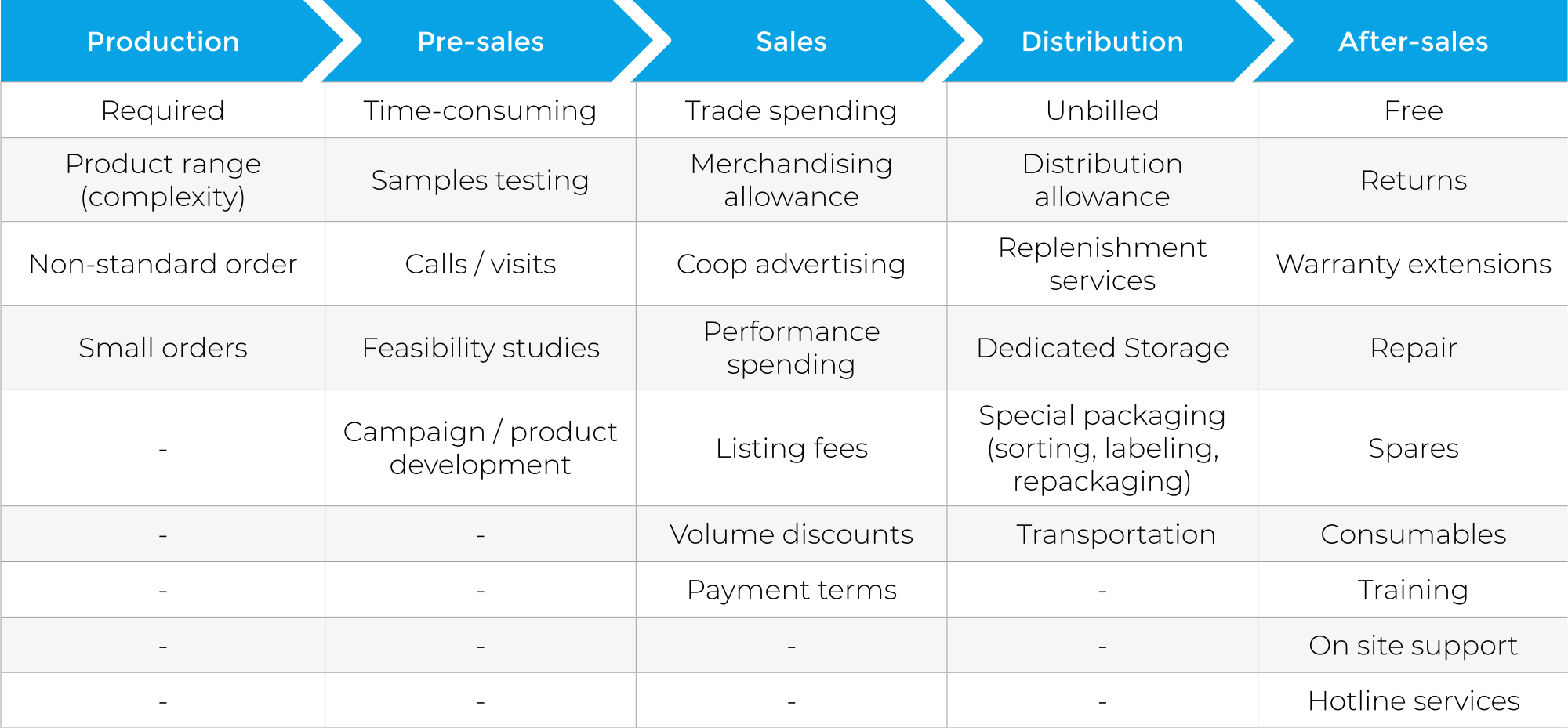
When the costs are added up, some customers prove to be huge profit leakages. And the profit holes will keep getting deeper if they are not monitored and managed.
Price optimization through subscription and new payment models
Over the past decade, software has increasingly found its way into traditional hardware products – for instance in medical devices and in building materials like pumps and heating systems. More recently, this trend has accelerated with the rapid adoption of AI technologies.
Rather than selling only a physical product, manufacturers now embed software and smart features that offer diagnostic tools, monitoring, automation, and continuous updates. This enables entirely new pricing models that align with customer usage, outcomes, and preferences.
This evolution opens the door to entirely new revenue models built around embedded software, connected services, and smart functionality. The shift – often referred to as “servitization” – is reshaping how value is delivered, perceived, and monetized. And the potential impact extends well beyond the typical 5–15% price optimization seen in more conventional strategies.
Subscription models and their price optimization potential
One of the most promising developments in servitization is the rise of subscription-based pricing models. These can take the form of software-as-a-service (SaaS) layers, device-as-a-service offerings, or performance-based contracts. For manufacturers, subscription models offer several compelling advantages in the context of pricing optimization:
- Recurring revenue streams. Instead of relying on one-time product sales, subscriptions create predictable, repeatable revenue. This not only improves financial planning but also enhances the long-term customer relationship. Pricing optimization shifts from a one-time negotiation to a continuous value exchange.
- Enhanced customer loyalty and retention. Subscriptions naturally foster longer customer relationships. When value is delivered continuously, switching becomes less attractive for the buyer. This loyalty supports price stability and makes it easier to introduce tiered pricing, upselling, or bundled offers as part of a broader pricing optimization strategy.
- Data-driven product improvements. Embedded software provides valuable usage data, allowing manufacturers to refine their offerings and introduce upgrades or premium features. This feedback loop creates an opportunity to adjust pricing based on actual value delivered – moving closer to the ideal of value-based price optimization.
Medtech example
A diagnostic device company no longer sells equipment outright but instead offers a subscription to a software platform that supports real-time analytics, remote monitoring, and AI-driven diagnosis. The hardware remains part of the solution, but the recurring revenue comes from the digital service. This model not only creates stickier customer relationships but also aligns pricing with clinical value – an important lever in Medtech pricing optimization.
Building materials example
Manufacturers in energy-efficient building materials have begun exploring pay-for-performance models. For example, a company may supply insulation systems bundled with sensors that track thermal performance. Instead of charging upfront, the manufacturer bills based on actual energy savings delivered over time. This shifts the pricing optimization focus toward long-term outcomes and positions the manufacturer as a partner rather than a supplier.
In both industries, the key is to align pricing with the value delivered over time – not just the product delivered at a point in time. Subscription and performance-based pricing are powerful tools in the broader pricing optimization toolkit. They allow manufacturers to redefine how they capture value, differentiate their offerings, and protect margins in increasingly competitive markets.
For companies entering or scaling in these models, careful attention to pricing structure, tiering, and customer segmentation is essential. Price optimization in this context becomes an ongoing process – one that adapts to usage patterns, evolving needs, and new technological capabilities.
Operational enablers of pricing optimization
Effective price optimization does not stop at setting the right list prices. To translate pricing strategies into measurable profit improvements, companies must address the operational side of pricing. Without the right internal alignment and infrastructure, even the best pricing optimization efforts can fall flat.
In our experience, operational enablers are often the hidden lever behind successful pricing optimization initiatives. Small, targeted changes in internal operations – sometimes as simple as adjusting sales incentives – can lead to remarkable improvements in price realization. Below are key operational areas that should be systematically addressed as part of a price optimization program:
- Pricing policies. Clear, transparent, and enforced pricing policies are essential to prevent margin erosion. These should cover not only list prices but also discount thresholds, approval hierarchies, contract terms, and the conditions under which deviations are allowed. A robust policy framework enables sales teams to operate with confidence and consistency while protecting margins.
- Sales bonus and incentive structures. Incentive misalignment is a common barrier to pricing performance. If sales bonuses are based solely on volume or revenue, there’s little motivation to protect margins. Companies should redesign their incentive programs to reward profitable growth – balancing earnings, volume, and adherence to pricing guidelines. Even minor changes in bonus logic can significantly impact price discipline and net revenue outcomes.
- Sales and pricing education. A sales representative should never discuss prices without also talking about value. The two go hand in hand, like a weight in equilibrium. Yet sales teams often lack an understanding of value, as well as the tools and confidence to sell it alongside price. They sometimes receive training, but years can pass between sessions. In the meantime, they face daily challenges from customers who claim that prices are too high. Companies should help by establishing frequent value training routines to help sales reps “fight back.”
- Organizational ownership. Pricing must have a clear owner. Without ownership, it risks falling through the cracks between departments. Whether embedded in sales, finance, or a dedicated pricing function, strong governance ensures that pricing optimization efforts are implemented, monitored, and continuously improved.
- Tools and infrastructure. Price optimization efforts benefit immensely from the right systems and tools. This includes pricing software, CPQ platforms (Configure Price Quote), and data analytics capabilities. Tools enable faster decision-making, better compliance, and more accurate pricing at scale.
When these day-to-day operational elements are aligned, the impact on price optimization is substantial.
Building a price optimization process
Building a price optimization process is not about redefining your strategy – it’s about making sure your existing pricing strategy is executed effectively and refined over time to maximize profitability. Once your markets, segments, and overall pricing architecture are defined, the focus shifts to the operational side: how to improve price realization, reduce leakage, and systematically capture more of the value already being delivered.
Here’s how manufacturers, particularly in sectors like Medtech and building materials, can build a structured and operationally focused pricing optimization process:
- Define and monitor pricing metrics. Start by establishing clear pricing performance indicators. This includes net price realization, discount levels, deal profitability, price variance across similar customers, and adherence to pricing corridors. Without a clear view of the numbers, it’s impossible to know where optimization is needed.
- Identify price leakages. Review historical data to identify where margins are eroding. Are discounts being granted too freely? Are specific customer segments receiving inconsistent pricing? Do certain regions or reps underperform on net price? These insights help prioritize where pricing optimization efforts should be focused.
- Harmonize tools and governance. Many pricing inefficiencies stem from fragmented processes or outdated tools. Ensure pricing is supported by the right infrastructure – this includes centralized pricing systems, quoting tools, and workflows for approvals. Define who owns pricing, how changes are made, and how compliance is tracked.
- Test and adjust price elements. Price optimization involves market testing. This may involve A/B testing of price levels or market research. In recent years, markets have proven to be anything but stable, with customer views, preferences, and willingness or ability to pay constantly changing. We recommend conducting market research every two years in key markets/segments and carrying out smaller-scale research and interviews in between to identify trends early on.
- Enable the sales team. Sales execution is where pricing strategies succeed or fail. Ensure the sales force has clear pricing guidelines, understands the logic behind them, and is trained to sell on value. Equip them with deal review support or automated guardrails to ensure pricing stays within range.
- Establish a review rhythm. Embed pricing optimization into the operating cadence. Set up quarterly or monthly reviews to track KPIs, audit compliance, and identify emerging issues. Pricing optimization is not a project – it’s a loop. Small changes, executed consistently, drive the biggest returns.
Pricing optimization is not about inventing something new each time. It’s about continuous fine-tuning – working with what you already have and improving it systematically. The companies that do this well treat pricing not as a static framework, but as an evolving process where operational rigor meets commercial insight.
Conclusion: price optimization is a business discipline
Most manufacturers invest heavily in innovation, product quality, and customer service – yet leave substantial value on the table when it comes to pricing. Price optimization is often seen as a tactical lever, when in fact it should be treated as a core business discipline.
We consistently see that the biggest opportunities often do not lie in revolutionary price changes, but in the details: understanding how customers perceive value, reducing discounting inconsistencies, aligning internal incentives, and optimizing cost-to-serve.
It’s also clear that new business models – like subscriptions and pay-for-performance – are creating even more ways to align pricing with delivered value. But none of these approaches work in isolation. Successful pricing optimization requires structure, ownership, and a commitment to ongoing refinement.
The upside is real: companies that get pricing right see measurable improvements in margin, customer retention, and competitiveness – often within months. If your company hasn’t yet taken a systematic approach to pricing optimization, now may be the time. We’ll assess where you are today and identify where the biggest untapped profit opportunities lie.